
Hydration, Sun, and Recovery 101: Master Outdoor Summer Training in Sydney
Hydration, sun protection, and smart recovery can turn Sydney’s brutal summer sessions into some of your strongest training days.
Why Hydration Matters So Much
Once you lose about 2 percent of your body weight through sweat, your power can drop by up to 20 percent and your heart rate can climb significantly, which is why sessions suddenly feel harder and your form starts to fall apart. In Sydney’s hot, humid mornings, it is common to lose around 1 to 2 litres of sweat per hour during hard circuits or Bay Run laps, so you need a plan rather than guessing.
Dehydration also thickens the blood and makes it tougher for your body to deliver oxygen to working muscles, which increases fatigue and injury risk. On top of that, every drop of sweat carries electrolytes such as sodium, potassium, and magnesium, so if you do not replace them you are more likely to cramp and feel wiped out early.
Sports medicine guidelines in Australia recommend drinking in the couple of hours before training and then topping up during longer sessions, especially in the heat, because fluid needs go up in hot conditions. At Outdoor Squad, hydration is treated as non negotiable, with checks before the warm up and quick resets during drills so you are not trying to play catch up once you are already thirsty.
Easy Electrolytes Without Fancy Products
You do not need to live on fluorescent sports drinks to cover your electrolyte needs for most 45 to 60 minute workouts. Everyday foods can quietly do the job in the background.
Sodium: Vegemite on toast, pickles, or a small serve of salted popcorn before or after a session.
Potassium: Coconut water, bananas, and avocado.
Magnesium: A handful of almonds or a smoothie with spinach.
Calcium: Greek yoghurt to help reduce twitchy, overworked muscles.
For typical Outdoor Squad style sessions under an hour, most people can skip commercial sports drinks and avoid the sugar crash that comes with them. A simple homemade drink works well: water with a pinch of salt, a squeeze of lemon, and a teaspoon of honey for flavour and a small carbohydrate boost.
Smarter Sun Protection In Sydney
In January, Sydney regularly hits very high to extreme UV levels, which means unprotected skin can start to burn in well under half an hour in the middle of the day. Even when you do not see obvious sunburn, that UV load increases inflammation, slows recovery, and ages skin much faster than most people realise.
Think of sun defence as layers rather than relying on one product. A zinc based SPF50+ on the face, ears, lips, and neck, reapplied roughly every hour in strong sun, gives a solid physical barrier. Add sun smart gear like legionnaire hats, light long sleeve UV tops, and neck gaiters you can pull up over the face when needed, and then use shade lines around places like Sydney Park or the Bay Run to rotate your stations out of direct sun when possible.
Timing helps too. Early morning and late afternoon sessions are friendlier on both UV and heat, with UV levels typically dropping later in the day compared with midday peaks. Framing your main work between about 6 to 8 am or from late afternoon to dark can make a noticeable difference in how cooked you feel afterwards.
Practical Recovery In The First 24 Hours
Recovery is not just about putting your feet up, it is about giving your body what it needs to bounce back stronger for the next session. Training in the heat adds extra stress, so you get more out of the work if you pay attention to the next day, not just the hour on the field.
Here is a simple way to structure the first 24 hours after a hot session:
First 30 minutes: Walk a few easy laps until breathing and heart rate come down, then use a cool, wet towel on your neck or forehead to help drop your core temperature. Add a short stretch for hips and hamstrings while you are cooling down.
First 2 hours: Aim for a snack or meal with roughly a 3 to 1 ratio of carbohydrates to protein, such as a milk based smoothie with oats and banana or a chicken wrap plus a piece of fruit. This mix supports muscle repair and helps refill glycogen stores more efficiently than protein alone.
Next few hours: Keep moving gently with walking, light mobility, or an easy ride so you do not stiffen up, and keep sipping fluids rather than downing everything at once.
Evening: Focus on a calm wind down, which might be a magnesium rich meal such as salmon with greens, plus a consistent bedtime with reduced screen time to protect sleep.
Overnight, your body does most of your repair work, and getting roughly 7 to 9 hours of good quality sleep is strongly linked with better adaptation to training and lower injury risk. If you often wake with calf cramps, a small serve of coconut water and a few nuts in the evening can contribute extra electrolytes without being too heavy before bed.
What To Eat For Heat Recovery
When you train in hot conditions, you are not just replacing calories, you are trying to reduce inflammation, reload fuel, and support the immune system. Thinking in terms of small surprises for each meal can make planning much easier.
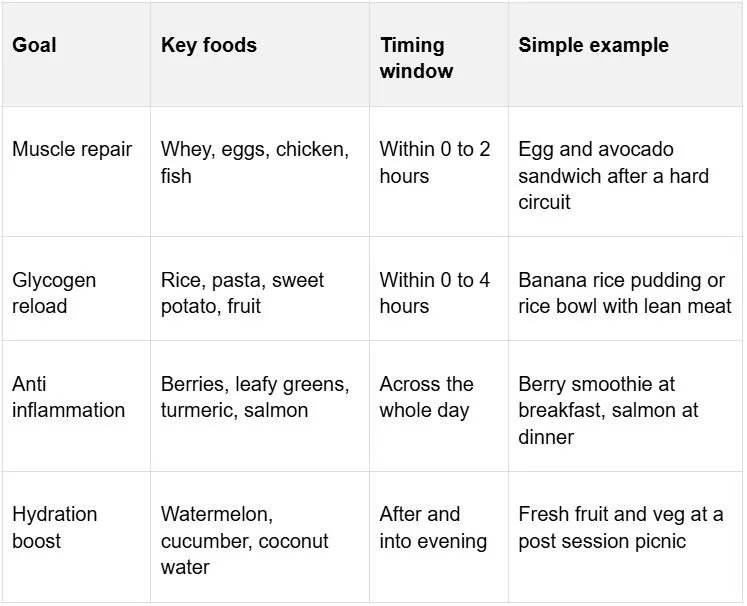
Sports nutrition guidelines suggest that combining carbohydrates and protein soon after exercise improves glycogen restoration and muscle repair compared with carbs alone, particularly when you cannot get a lot of carbohydrate in. Across the full day, an active 70 kilogram adult in summer might sit roughly around 1.6 to 2 grams of protein per kilogram, 5 to 7 grams of carbohydrate per kilogram, and about 1 gram of fat per kilogram as a general starting point, with a small bump in carbohydrate intake on the hottest, highest load days.
Checking Your Recovery And Staying Consistent
You do not need a lab to tell whether the heat is catching up with you. A quick scan in the morning of resting heart rate, perceived soreness, and energy is often enough to decide whether to push or back off. If your resting heart rate is noticeably higher than usual and your muscles feel more than moderately sore, swapping a hard run for a walk, light mobility, or a swim can keep your overall week on track rather than losing momentum.
Simple tools help you stay honest. A urine colour chart on the fridge or in an app gives feedback on hydration, while repeating the same short test run at a set pace each week shows how your body is adapting to the heat over time. Many Outdoor Squad members also lean on group chats and post session coffees as informal debriefs, which is often where people notice patterns like “I always under fuel on Tuesday mornings” and adjust before it becomes a bigger problem.
If you keep layering good hydration, sun habits, and recovery choices week after week, summer stops feeling like something you just need to survive. By the time the weather cools, most people find that the fitness they built under hot conditions makes autumn sessions feel surprisingly manageable, both mentally and physically.
